Creative Round Glass Aquarium Setup: Style & Stability
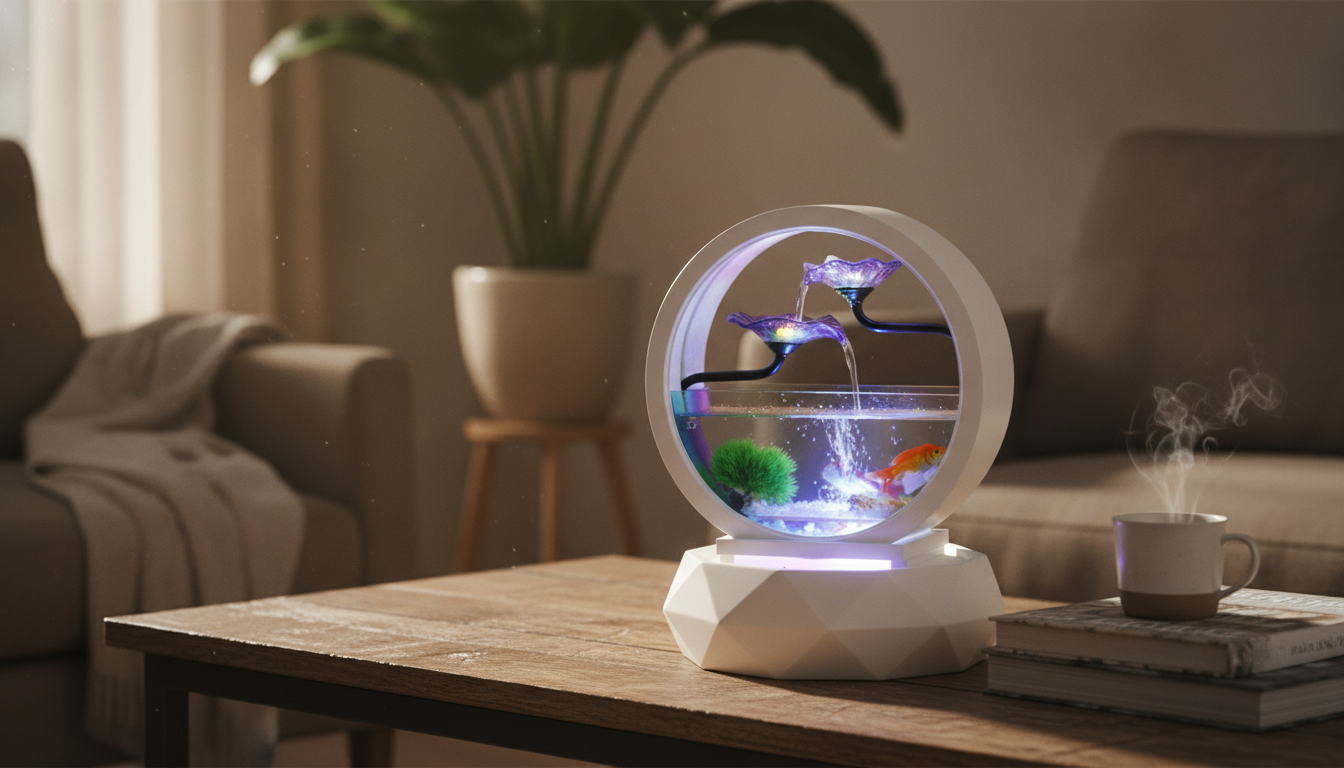
Creative Round Glass Aquarium: A Modern Centerpiece for Small Aquatic Setups
A round glass aquarium can turn a small aquatic setup into a sculptural focal point—ideal for desks, bookshelves, credenzas, and side tables where a standard rectangular tank feels bulky. The key is treating the bowl-like shape as a design choice that comes with real husbandry considerations: oxygen exchange, filtration fit, temperature stability, and a maintenance routine that keeps water clear and livestock healthy.
What Makes a Round Glass Aquarium Different
Round tanks look simple, but their shape changes how the setup behaves and how it’s viewed. Here are the practical differences that matter most day-to-day.
- Panoramic viewing: Curved glass creates a 360° “gallery” effect that works well in minimalist rooms and decorative spaces.
- Smaller footprint: Many round bowls fit where rectangles don’t, especially on narrow furniture.
- Unique optical effects: Curvature can magnify or distort details; uncluttered layouts tend to look best.
- Surface-area limits: Bowls often have less surface area for gas exchange than wide tanks of similar volume, so oxygenation must be planned.
- Hardware trade-offs: Lights, lids, and filters are usually designed for rectangles, so you may need compact gear or creative mounting.
Creative Round Glass Aquarium at a Glance
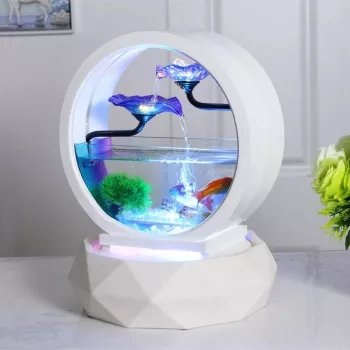
As a decorative round-glass display, the Creative Round Glass Aquarium is best approached as a compact layout that benefits from a stable stand, a level surface, and a clear plan for either filtration or frequent water changes. Also, confirm availability before purchasing livestock so animals aren’t left waiting in temporary containers.
| Item | Details |
|---|---|
| Product name | Creative Round Glass Aquarium |
| Price | 667.51 USD |
| Stock (listing) | 36 |
| Product page | https://marshale.com/creative-round-glass-aquarium/ |
| Listing image | https://img1.sellvia.com/uploads/2024/02/21/65e3cd1d1f3e4deda3530b768b65911c.jpg-350×350.webp |
How to Choose the Right Round Glass Aquarium Setup
Round aquariums are most successful when the setup is chosen around stability first, aesthetics second. A few decisions upfront prevent most “mystery cloudiness” and livestock losses later.
- Pick a volume first: Larger volumes change temperature and chemistry more slowly. Ultra-small bowls are typically better suited to plants or invertebrates than fish.
- Decide the livestock type: Plants-only, shrimp/snails, or a single fish species all have different oxygen, heating, and waste needs.
- Plan for filtration: If a small sponge filter or compact internal filter fits safely, it can dramatically increase stability. If not, commit to a strict water-change schedule.
- Choose lighting based on goals: Low light supports hardy plants with less algae pressure. Stronger lights expand plant choices but demand better nutrient and maintenance balance.
- Add a lid or cover option: Covers help with evaporation, dust, and jump risk (for species prone to it) while also reducing splashes in office areas.
- Check glass thickness and rim design: Stability matters; round tanks can be awkward to grip when wet, and a secure rim/base helps during moves and maintenance.
- Measure the placement area: Leave clearance for hands, tools, and safe cord routing—maintenance access is often tighter on bowls.
Stocking Ideas That Suit Round Aquariums
The most attractive round glass aquariums often have the simplest stocking plans. Less bioload generally means clearer water, fewer parameter swings, and easier long-term care.
- Plants-only display: A stone cluster or driftwood with hardy plants like anubias, java fern, and moss can look refined with minimal equipment.
- Shrimp and snails: With stable parameters and a copper-free environment, many shrimp/snail combinations can thrive in planted nano setups.
- Single-feature livestock: If keeping fish, focus on species-appropriate space, filtration, heating, and enrichment rather than trying to “fill” the bowl.
- Avoid overstocking: A round tank can look roomy because of the panoramic view, but the water volume (and filtration capacity) is still limited.
- Quarantine additions: Small systems can crash quickly after disease introduction; quarantining protects the display and reduces emergency treatments.
Aquascaping for a Clean, Gallery-Style Look
Curved glass rewards restraint. A well-composed bowl reads like a living centerpiece, while a busy layout can look warped or crowded from certain angles.
Water Quality, Cycling, and Long-Term Stability
Small aquariums are less forgiving, so cycling and testing aren’t optional steps. Establish beneficial bacteria before animals are added so ammonia and nitrite don’t spike. For a clear overview of how the process works, see this explanation of the aquarium nitrogen cycle.
During the first month, test more frequently than you think you need to—especially after feeding changes or plant “melt.” Ammonia is particularly dangerous in warm, higher-pH water; this primer on ammonia (NH3/NH4+) in aquatic systems helps clarify why even small readings matter.
Maintenance Routine for Clear Glass and Healthy Livestock
A simple, repeatable routine is what keeps a round aquarium looking like a display rather than a science experiment. If you’re unsure where to start, this guide to aquarium water changes covers the “why” and the basic method.
Placement and Safety in Home or Office Spaces
FAQ
Can fish live in a round glass aquarium?
Yes, but suitability depends on the bowl’s volume and whether you can provide proper filtration, heating (if needed), and enough space for the species. Many small round bowls are better for plants or invertebrates unless they’re equipped and maintained like a true aquarium.
How often does a small round aquarium need water changes?
A weekly water change is a common baseline, but lightly stocked bowls may need less and heavily stocked or unfiltered setups may need more. Stocking level, feeding, plant growth, and filter size all affect the right schedule.
Does curved glass distort the view or stress aquatic animals?
Curved glass can distort the view for people, especially near the edges, but animal stress is more closely tied to water quality, space, and consistent conditions. Simple hardscapes and open swimming/visual space help keep the display calm and easy to read.









Leave a comment
You must be logged in to post a comment.