Wooden Backyard Playhouse: Door, Windows & Planters
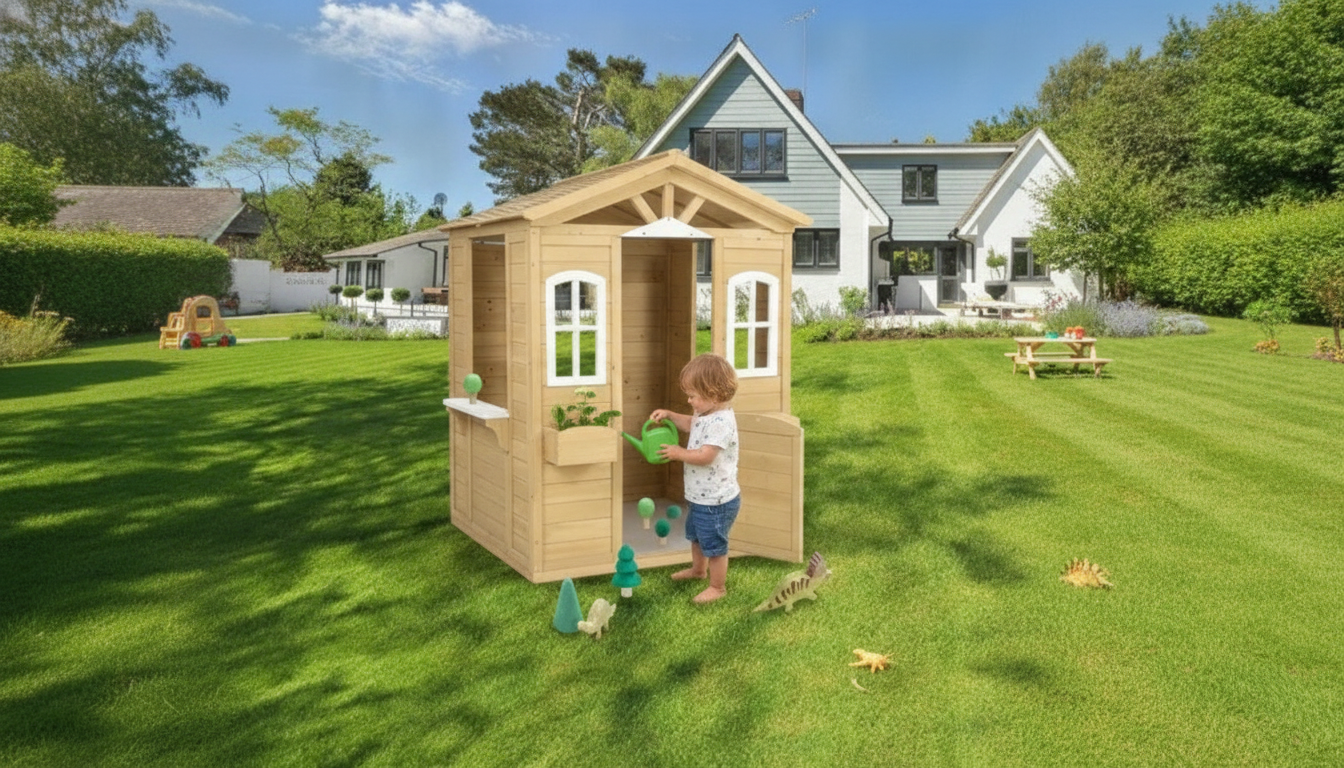
A wooden backyard playhouse can turn outdoor time into imaginative play while giving kids a cozy “own space” that still feels open and social. This style—complete with a working-style door, windows for light and airflow, and planter holders for pretend gardening—fits well in many yards, patios, and play areas when set up with safety, durability, and weather exposure in mind.
What Makes This Style of Playhouse Special
- Door and windows encourage realistic pretend play (home, shop, café) and help caregivers keep sightlines into the play space.
- Windows improve airflow and natural light, making the interior feel less enclosed during warm weather.
- Planter holders add a hands-on element for nature play—kids can “grow” herbs or flowers (real or pretend) and practice simple routines.
- Wood construction offers a classic look and can be easier to repaint or refresh over time than many plastics.
- A compact footprint can create a dedicated play zone without taking over the entire yard.
Quick Feature Checklist to Compare Options
- Door design: smooth edges, pinch-point awareness, easy open/close for small hands.
- Window style: shatter-resistant panels or open cutouts; look for rounded corners and secure fasteners.
- Planter holders: drainage, safe placement (not a climbing step), and ability to remove for cleaning.
- Surface finish: sealed/treated wood or paint appropriate for outdoor use; prioritize low-odor finishes after curing.
- Hardware quality: rust-resistant screws/hinges; covered screw heads reduce snag risks.
- Ventilation: more than one opening helps keep it comfortable in warmer months.
- Interior space: enough headroom and floor area for the primary age range using it.
Comparison Notes for Outdoor Wooden Playhouses
| Feature | What to Look For | Why It Matters |
|---|---|---|
| Wood protection | Outdoor-rated sealant/paint, clear care instructions | Helps reduce swelling, cracking, and mildew |
| Edges and corners | Rounded/sanded surfaces, no sharp cutouts | Improves comfort and reduces minor scrapes |
| Windows | Secure mounting, safe materials, smooth frames | Light/airflow while maintaining safety |
| Door | Stable hinges, controlled swing, easy grip | Encourages independent play with fewer pinches |
| Planter holders | Drainage, removable liner, not placed as footholds | Adds garden play without encouraging unsafe climbing |
| Anchoring options | Ability to stake or anchor where appropriate | Improves stability in wind and active play |
How to Choose the Right Size and Layout for the Yard
- Measure the placement area and add a buffer around the playhouse so doors can open fully and kids can move safely.
- Account for overhead clearance: avoid low branches, eaves, and tight fencing lines that limit access.
- Pick a layout that matches the play style: more windows for social play; a more enclosed design for quiet pretend play.
- Consider shared play: if siblings or friends will use it, prioritize a wider doorway and a bit more floor space.
- Think about supervision: orientations that face a common seating area can make casual monitoring easier.
How to Choose
When multiple wooden playhouse designs look similar online, the best choice usually comes down to the details you won’t notice in a single photo: how the door moves, how the windows are finished, and whether the wood and hardware are prepared for real weather. Start by matching the interior height and doorway opening to the kids who will use it most often, then confirm the playhouse can sit on a stable, level base with room to circulate around it.
Next, decide whether the planter holders are primarily decorative or something you’ll actually use. If kids will “garden” for real, prioritize drainage and liners that are easy to remove and rinse. If it’s mostly pretend play, a lighter, simpler holder can be safer and easier to keep clean. Finally, choose a finish you can maintain: a playhouse that can be re-sealed or repainted on schedule tends to look better and last longer than one that’s left to fade and swell through changing seasons.
Safety Setup for Outdoor Play
- Choose a flat base: a level, compacted area reduces rocking and premature frame stress.
- Use an appropriate ground surface: consider grass, mulch, or other impact-absorbing options depending on nearby climbing features and the surrounding play zone.
- Check for pinch points: pay extra attention around doors and shutters; teach kids to keep fingers clear and consider adding soft stops if needed.
- Keep planter holders from becoming steps: avoid placing heavy pots that invite climbing, and keep watering cans/tools stored separately.
- Do a fastener check: tighten loose screws after assembly and periodically afterward—especially hinges and any moving parts.
- Maintain clear sightlines: keep the playhouse away from grills, fire pits, pools, and driveways.
For broader outdoor play guidance, review recommendations from the U.S. Consumer Product Safety Commission (CPSC) Outdoor Home Playground Safety Handbook and age-appropriate outdoor safety tips from HealthyChildren.org (AAP). If you’re comparing structures and materials, ASTM provides an overview of relevant playground safety standards at ASTM International.
Weather, Maintenance, and Longevity
Play Ideas Using the Door, Windows, and Planter Holders
FAQ
What age range works best for an outdoor wooden playhouse?
Most families get the best use when the interior height, doorway size, and hardware match the main users—often preschool through early elementary. Toddlers can enjoy a playhouse with close supervision and simpler features, while older kids typically benefit from more headroom, sturdier hinges, and enough floor space for shared play.
How should a wooden playhouse be placed to handle rain and sun?
Place it on level ground with good drainage, avoiding low spots where water pools. Partial shade can reduce heat and fading, but keep airflow around the playhouse and maintain an outdoor-rated sealant or paint, then inspect and touch up after wet seasons.
Are planter holders safe on a kids’ playhouse?
They can be safe when they’re mounted securely and not treated like steps. Keep pots lightweight, ensure drainage so water doesn’t sit against the wood, avoid heavy items in the holders, store tools separately, and re-check mounting stability during routine maintenance.














Leave a comment
You must be logged in to post a comment.