52-Inch Cactus Cat Tree with Condos & Scratching Posts
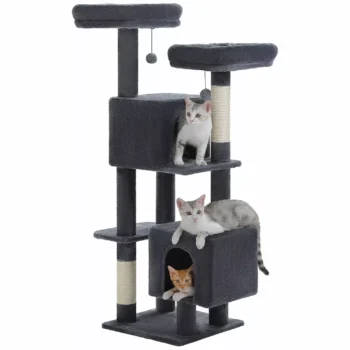
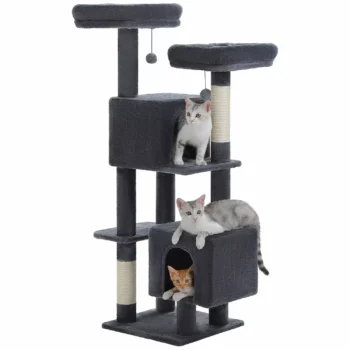
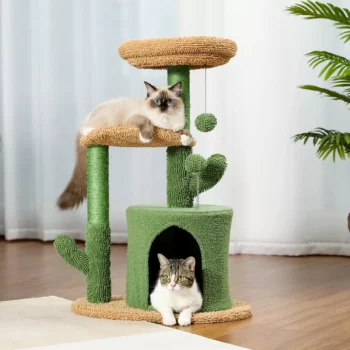
Cactus Cat Tree – 52″ Multi-Level Cat Tower with Perches, Condos & Scratching Posts
A multi-level cat tower can turn vertical space into a daily routine of climbing, scratching, napping, and watching the room. This cactus-themed 52-inch cat tree combines perches, enclosed condos, and multiple scratching posts to support play and rest for kittens through adult cats while helping protect furniture from claw marks.
Quick look: what this cactus cat tree offers
- 52-inch vertical layout designed for climbing, lounging, and surveying a room
- Multiple levels with perches for lookout spots and nap breaks
- Enclosed condos for privacy, decompression, and quieter sleep
- Dedicated scratching posts to redirect scratching away from sofas and rugs
- Cactus-inspired styling that blends playful decor with practical function
| Feature | Details |
|---|---|
| Product name | Cactus Cat Tree – 52″ Multi-Level Cat Tower with Perches, Condos & Scratching Posts |
| Height | 52 inches |
| Core functions | Climbing, perching, hiding, scratching |
| Rest zones | Perches + enclosed condos |
| Scratch zones | Multiple scratching posts |
| Best for | Indoor cats needing vertical territory and separate rest/play zones |
| Price (listed) | 130.51 USD |
Layout and daily use: perches, condos, and pathways
A well-designed multi-level tower works best when it supports the way cats naturally move: up to investigate, pause to observe, then down to reset and repeat. With multiple perches and enclosed condos, this 52-inch cactus cat tree can become a predictable “home base” that many cats return to throughout the day.
- Perches as checkpoints: Elevated platforms act like mini rest stops, encouraging confident climbing and providing quick pauses between play bursts.
- Condos for privacy: Enclosed hideaways give cats a place to decompress away from noise, guests, or other pets—especially helpful for shy cats and multi-pet households.
- Clear pathways: A multi-level route supports safe movement and reduces the “all-or-nothing” leaps that can happen with single-platform furniture.
- Sharing the tower: Perches at different heights can reduce competition by offering more than one desirable resting spot at the same time.
For cats that like to supervise their environment, the top levels often become a daily lookout. For cats that prefer quieter rest, a condo can serve as a consistent nap zone, which may help reduce stress-related hiding elsewhere in the home.
Scratching support: protecting furniture and supporting healthy claws
Scratching isn’t “bad behavior”—it’s a normal, healthy need that helps cats maintain claws and leave scent marks. The goal is to make the cat tree the easiest, most rewarding place to scratch.
- More posts, more success: Multiple scratching posts increase the odds that a cat chooses the tower instead of nearby furniture.
- Make the preferred option convenient: Place the tower near existing scratch targets (couch corners, door frames, area rugs) so the cat doesn’t have to “search” for an appropriate surface.
- Positive reinforcement: If your cat enjoys it, a small amount of catnip on the scratching areas can help. Another option is a short play session that ends with your cat climbing onto the tower, followed by a treat.
- Pair with basic claw care: Keeping nails trimmed and offering scratching variety can reduce snagging on fabrics while still meeting the scratching need.
For more on building a cat-friendly environment that supports normal behaviors, see the American Association of Feline Practitioners (AAFP) Feline Behavior Guidelines and the ASPCA’s cat enrichment guidance.
Stability, space, and placement tips
Placement can determine whether a cat tree becomes a daily destination or a rarely used object. A stable feel underfoot is especially important for cats that launch onto the tower at speed.
- Start with the floor: Choose a flat, non-slippery surface. On hard floors, a thin grippy mat under the base can reduce sliding.
- Use a wall for confidence: For enthusiastic jumpers, placing the tower against a wall can reduce side-to-side sway and make upper levels feel safer.
- Protect nearby items: Avoid positioning directly beside fragile décor that could be knocked over during play.
- Boost engagement with a view: A window-adjacent spot often increases use by turning the top perch into a birdwatching station.
Also consider “run-up” space. Cats like a clear approach path so they can jump on and off without slipping or colliding with furniture edges.
Assembly and setup that helps cats accept it faster
Even the best tower can be ignored if it wobbles or smells unfamiliar. A few setup steps can make the first week smoother.
Care and upkeep for long-term use
How to choose the right multi-level cat tower for your home
FAQ
Where should a multi-level cat tower be placed?
Place it on a flat, stable surface in a relatively calm area, ideally against a wall for extra steadiness. Spots near a window or close to existing scratching hotspots often get the most daily use, as long as fragile objects are kept out of reach and there’s clear jump space.
How can a cat be encouraged to use the condos and perches?
Use treats and short play sessions to reward exploration, starting with the lowest levels and letting your cat choose the pace. You can also add familiar bedding or a worn T-shirt inside a condo; avoid forcing your cat into enclosed spaces.
How often should the bolts and posts be checked?
Check and tighten fasteners after initial setup, then weekly for the first month, and monthly after that. Regular tightening reduces wobble, helps prevent wear at connection points, and keeps the tower feeling secure under active jumping.













Leave a comment
You must be logged in to post a comment.