D&G Gold Bangle Bracelet: Multicolored Crystal Style Guide
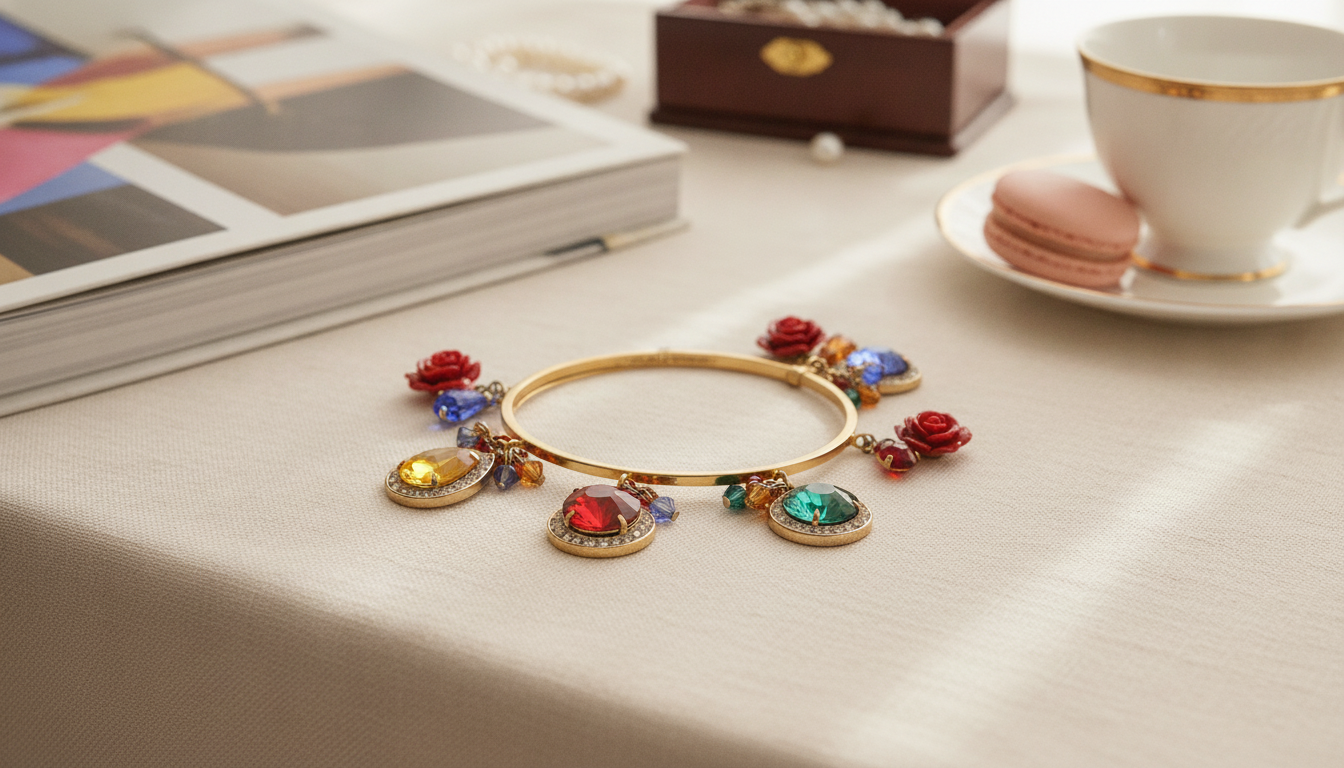
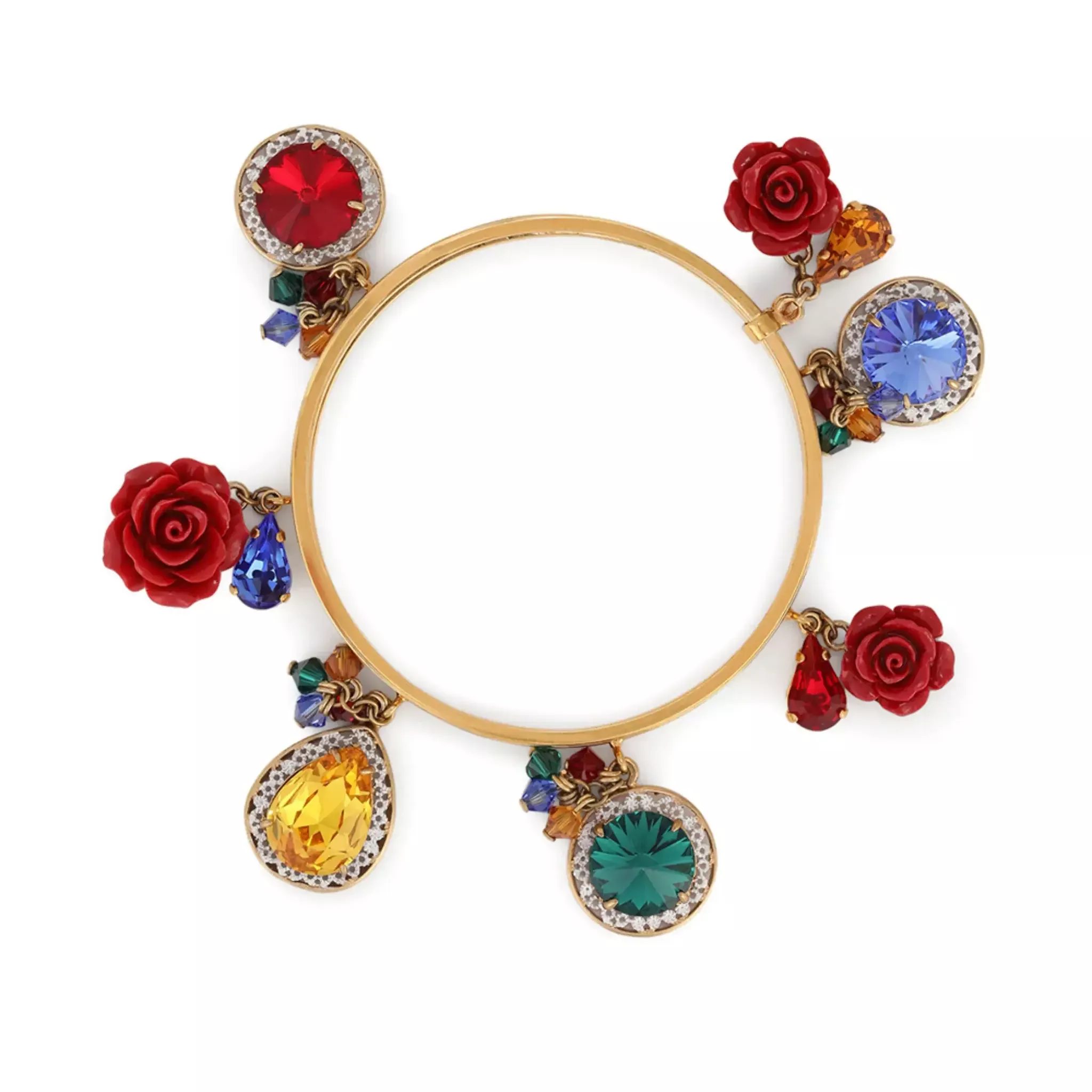
Dolce & Gabbana Women’s Gold Bangle Bracelet with Multicolored Crystals
A gold-tone bangle set with multicolored crystals delivers instant color and polish—perfect for evenings out, events, and elevated everyday outfits. The structured silhouette reads more architectural than a chain bracelet, while the crystal mix adds a jewel-like finish that can carry an entire look on its own. Below are the design details worth noticing, fit and comfort tips, styling ideas, care routines, and a practical way to compare similar crystal bangles before choosing the right piece.
Design at a Glance
- Gold-tone bangle silhouette with multicolored crystal accents for a vibrant, jewel-like finish.
- Structured form that feels refined and architectural compared with flexible chain bracelets.
- The color mix can become the focal point, reducing the need for additional jewelry.
- Ideal when a statement accessory is desired without layering multiple pieces.
Multicolored crystals tend to read “intentional” rather than “matchy.” Instead of trying to pair your jewelry to one exact shade, the bracelet’s palette can echo several colors in your wardrobe at once—especially useful for travel, special occasions, or outfits that already include texture and shine.
Key Details to Check Before Buying
- Crystal setting style: favor secure settings (prong, bezel, or channel). Stones should sit cleanly with no lifted edges that can catch on knitwear.
- Finish quality: gold-tone surfaces look most luxurious when the color is even, with no patchiness around edges or seams.
- Comfort profile: the inner surface should feel smooth and rounded; crystals shouldn’t press into the wrist when the hand bends.
- Closure and opening: hinged bangles are typically easier to put on; rigid slip-on bangles require more precise sizing.
- Weight balance: a well-made bangle sits centered instead of constantly rotating so the crystals end up underneath.
| Feature | What to Look For | Why It Matters |
|---|---|---|
| Crystal security | Stones sit flush; no wobble; tight prongs/bezel | Reduces risk of loss and snagging |
| Comfort edges | Rounded inner rim; smooth joins | Improves all-day wearability |
| Color clarity | Even sparkle; consistent saturation across stones | Creates a cohesive, luxe look |
| Plating quality | Uniform tone; minimal visible seams | Helps the finish look polished longer |
| Sizing approach | Hinge vs slip-on; measured wrist/hand | Prevents fit issues and returns |
How to Choose a Crystal Bangle Like This
When comparing gold-tone crystal bangles, start by deciding what you want the bracelet to do for your wardrobe: be the main statement, a “pop” of color, or a refined finishing touch for formalwear. From there, a few practical comparisons make decision-making easier.
- Choose your crystal vibe: jewel tones (emerald, ruby, sapphire-like shades) read dramatic and evening-forward; brights feel playful; softer pastels look romantic and daytime-friendly.
- Pick a setting that matches your lifestyle: a lower-profile setting is usually better if you wear sweaters, scarves, or long sleeves often, since it’s less likely to snag.
- Decide on structure: a rigid, fully closed bangle looks crisp and tailored; a hinge can be more convenient for daily wear; an open cuff offers adjustability if you dislike a fixed fit.
- Balance scale with your outfits: if you wear minimal silhouettes, a bolder crystal layout can shine; if you wear busy prints, consider a slightly slimmer bangle so the look doesn’t feel crowded.
- Confirm material details: if you have sensitive skin, avoid unknown plating compositions and look for clearly stated materials and care guidance.
For background on gemstones and color characteristics, the Gemological Institute of America (GIA) colored stones overview is a reliable reference, and the FTC Jewelry Guides offer helpful context on jewelry marketing and quality disclosures.
How to Choose the Right Size and Fit
- Measure wrist circumference with a soft tape; add a comfort allowance depending on preference (snug vs. relaxed).
- For slip-on bangles, measure the widest part of the hand (usually around the knuckles) so the bracelet can pass through.
- If choosing a hinged bangle, confirm inner diameter/inner circumference and hinge opening width.
- A statement bangle often looks best with a slightly relaxed fit that can move subtly without sliding over the hand.
- If stacking is the goal, consider a slimmer profile or a roomier fit to avoid pressure points.
A quick fit test concept: the bracelet should glide a little when you move your wrist, but it shouldn’t spin so much that the crystal face constantly ends up on the underside. That “centered” feel is a good sign of balanced weight and a workable size.
Styling Ideas for Multicolored Crystals
Care and Storage
Gifting Notes
Alternatives to Consider
FAQ
How can a bangle bracelet be sized correctly if it doesn’t have an adjustable chain?
Measure your wrist circumference for comfort, but for slip-on bangles also measure the widest part of your hand (usually across the knuckles) to ensure it can pass through. For hinged bangles, check the inner diameter/inner circumference and the hinge opening width, then add a small comfort allowance based on whether you like a snug or relaxed fit.
How should crystal jewelry be cleaned without dulling the shine?
Wipe it gently with a soft, dry microfiber cloth after wearing to remove oils and residue. Avoid harsh chemicals and heavy soaking; if needed, use a slightly damp cloth with mild soap, then dry completely before storing separately.
Can a multicolored crystal bangle be worn daily?
Yes, as long as it’s treated like a delicate accessory: keep it away from water, chemicals, and impact, and remove it for workouts, swimming, and cleaning. If you wear knits often, choose a smoother setting profile and check that no prongs or edges are lifted to minimize snagging.









Leave a comment
You must be logged in to post a comment.