Wide Armless Swivel Desk Chair: Home Office & Vanity
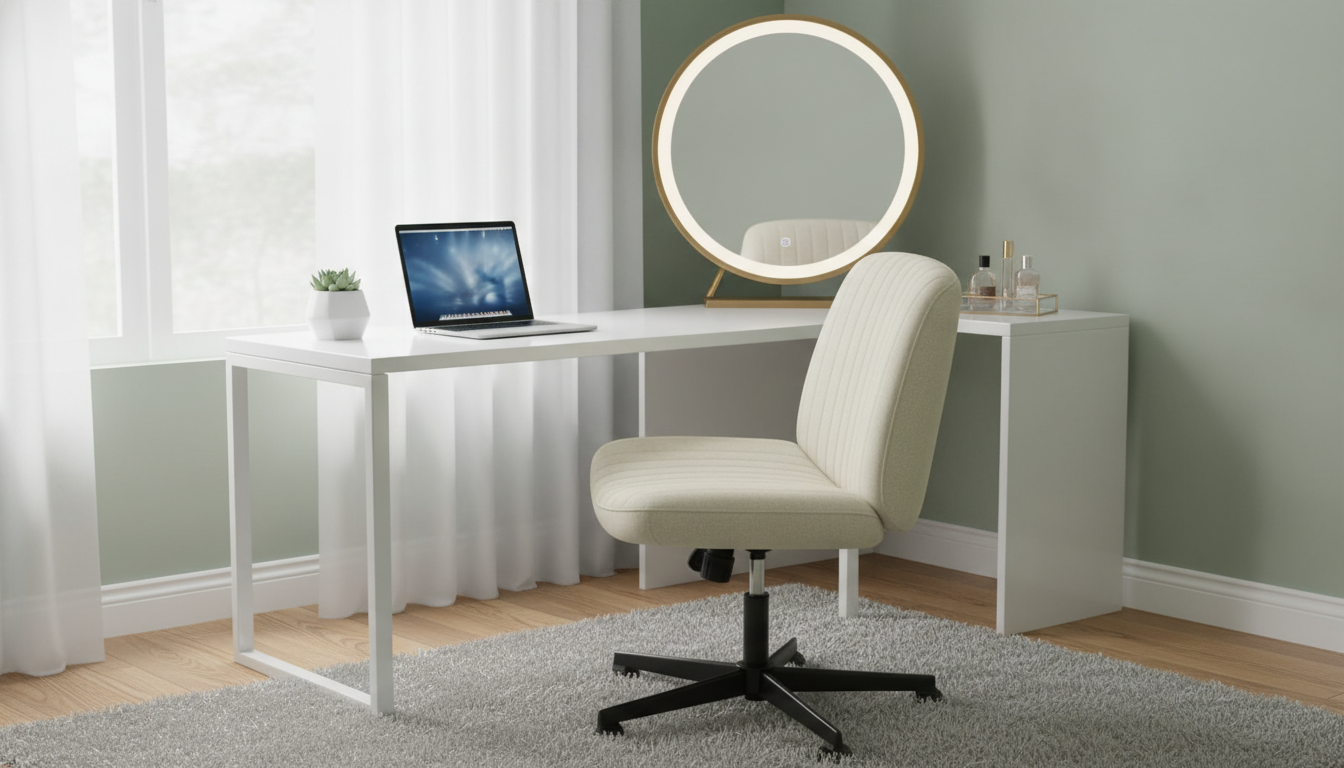
Wide Armless Swivel Desk Chair for Home Office & Vanity
A wide, armless swivel chair can make small workstations and vanity setups feel more open while still offering the support needed for daily use. With no arms to bump into drawers or table edges, it’s easier to slide in, rotate between tasks, and keep a tidy look in tight corners. The goal is to find the sweet spot: roomy seating that still encourages a stable, comfortable posture for work, getting ready, or both.
What a wide armless swivel chair changes in a room
- Creates visual breathing room: no arms means a lighter profile that fits vanities and compact desks without crowding the space.
- Easier side-to-side movement: swivel seating helps when switching between keyboard, notebook, drawer, or mirror.
- Better fit for varied sitting styles: cross-legged or angled sitting can feel less restricted with an armless seat (with posture trade-offs to manage).
- More flexible placement: slides under many desks and vanities more easily than armed task chairs, which can reduce clutter in multipurpose rooms.
Quick overview of the featured chair
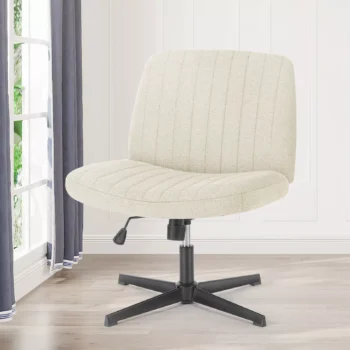
- Product: Wide Armless Swivel Desk Chair for Home Office & Vanity
- Price: $82.99 (USD)
- Design focus: wide seat, armless profile, swivel base for easy movement between tasks
- Best suited for: writing desks, laptop stations, vanity tables, dorm rooms, and multipurpose corners
This style is built for “small-space living” reality: you might answer emails, do a quick hair routine, and then pivot right back to a notebook—all from the same seat. The wide, armless shape supports that fluid routine while keeping the chair visually streamlined.
Key features to pay attention to before buying
- Seat width and depth: a wider seat improves comfort, but depth needs to match leg length so the edge doesn’t press behind the knees. A little space between the seat edge and the back of your knees helps circulation.
- Height range: confirm the chair can align elbows with the desktop and keep feet flat (or plan for a footrest). Height matters even more without armrests because your desk becomes the “arm support.”
- Swivel and base stability: a smooth swivel should feel controlled, while the base should feel steady during reach-and-turn movements (like grabbing a brush, opening a drawer, or reaching for a planner).
- Cushioning and upholstery: thicker padding can feel plush for vanity use; denser foam tends to hold shape better for longer sessions. Consider how many hours a day you’ll sit.
- Back support shape: armless chairs often rely on the backrest to keep posture from collapsing; look for a supportive curve and adequate height so you can sit back instead of perching forward.
How to choose the right wide armless swivel chair
- Match chair height to your surface: measure desk/vanity height and aim for comfortable forearm support without shrugging shoulders. If your vanity is taller than a standard desk, prioritize a chair with enough height range.
- Decide your priority: vanity comfort (softer cushion, easy swivel) vs. work focus (firmer seat, more supportive back). If you split time evenly, look for balanced firmness: supportive, not stiff.
- Check space and clearance: measure the space between table legs and the under-desk/under-vanity area for slide-in storage. Armless chairs often fit better, but base width and seat height still matter.
- Plan for posture: if sitting cross-legged is common, alternate positions and use a small lumbar cushion to avoid slouching. Wide seats invite relaxed positions—comfort is great, but variety helps prevent fatigue.
- Choose a floor plan: consider adding a low-pile mat on carpet for smoother movement and to protect flooring. On hard floors, protective pads can reduce scuffs and noise.
For ergonomics guidance you can apply to any chair style, reputable references like Mayo Clinic’s office ergonomics guide and OSHA’s computer workstation resource outline practical alignment basics that become especially important when your chair doesn’t have armrests.
Sizing, setup, and ergonomic tips for daily comfort
At-a-glance checklist
Wide armless swivel chair comparison checklist
| What to check | Why it matters | What to measure/confirm |
|---|---|---|
| Seat width and depth | Comfort and freedom of movement without cutting off circulation | Seat depth vs. leg length; space behind knees |
| Height range | Proper desk alignment and foot support | Desk height; minimum/maximum seat height |
| Backrest support | Helps maintain posture without armrests | Backrest height; contour; add-on lumbar pillow option |
| Swivel smoothness and stability | Easy turning without wobble | Base footprint; stability during reach |
| Cushion density | Long-term comfort and shape retention | Foam feel (soft vs. firm); user time per day |
| Floor compatibility | Protects floors and improves movement | Hard floor vs. carpet; need for mat/foot caps |
Care and longevity
FAQ
Is an armless chair comfortable for working at a desk?
Yes for many setups, especially for short-to-moderate sessions. Comfort depends on seat size, cushion firmness, and backrest support, and desk height alignment matters more without armrests.
Will a wide armless chair fit under a vanity table?
Often, yes—armless designs typically slide in more easily. Measure the opening width between vanity legs and the clearance height under the tabletop, then confirm the chair can lower enough to tuck in.
How can a swivel chair be used without feeling unstable?
Choose a chair with a stable base, keep frequently used items within easy reach to reduce over-twisting, and set the seat height so your feet are well supported. On carpet, a chair mat can improve control and smoothness.













Leave a comment
You must be logged in to post a comment.